What to Wear for Your Monterey Peninsula Photoshoot: A Simple Guide to Feeling Camera-Ready
What to Wear for Your Monterey Peninsula Photoshoot: A Simple Guide to Feeling Camera-Ready
“I have no idea what to wear.”
If that thought hit you the moment you booked your session, you’re in good company — it’s the number one question I get from clients, every single time. And here’s the good news: dressing for a photo shoot isn’t about buying a whole new wardrobe or following a strict set of rules. It’s about choosing pieces that make you feel like the best version of yourself, because confidence photographs better than any outfit ever could.
This guide walks you through exactly how to plan what to wear to your photo shoot anywhere on the Monterey Peninsula — the colors that flatter on camera, the textures that add depth, how to coordinate a group, and the few things I’d genuinely steer you away from. (Heading to the beach for your session? I’ve got a coastal-specific styling guide just for that.)
Start With Comfort (Seriously)
Before we talk colors or coordination, here’s the rule that matters most: if you’re tugging at it, adjusting it, or worried about it, it will show in your photos.
Your session will involve moving — walking, sitting, twirling kids in the air, snuggling in close. Choose clothes you can actually live in for an hour. That means:
– Fabrics with a little stretch or flow
– Shoes you can walk in (bring backup flats if you’re doing heels)
– Nothing so new you haven’t “road tested” it yet
Try your full outfit on a few days before your session. Sit down in it. Lift your arms. If anything pinches, gaps, or rides up, now’s the time to know.
Choose Colors That Love the Camera
You don’t have to match your outfit to a paint swatch, but some colors simply photograph better than others.
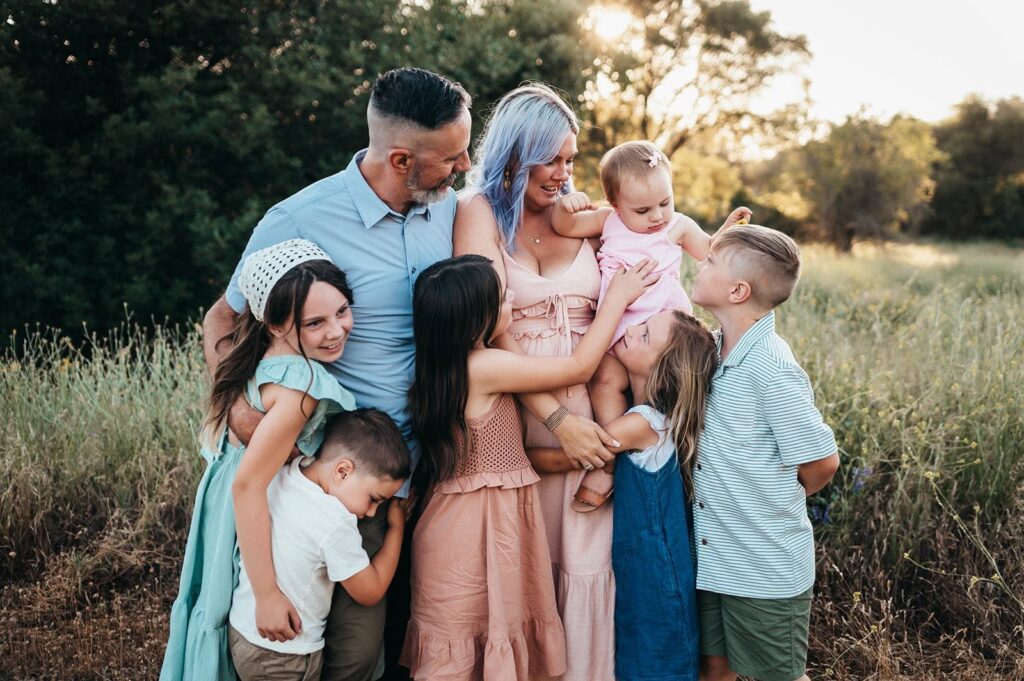
Colors that consistently look beautiful on camera: soft neutrals (cream, oatmeal, taupe, warm gray), earth tones (rust, olive, mustard, terracotta), and muted shades of almost anything — dusty blue, sage green, mauve.
Colors to use with care: neon and ultra-bright shades can cast color onto skin, and large blocks of pure white or jet black can lose detail in bright light. If you love white, look for ivory or cream instead — it’s softer and far more forgiving.
A helpful trick: think about where you’re being photographed. Earth tones sing in a golden field at sunset. Soft blues and creams are gorgeous at the beach. If you’re not sure what suits your location, just ask — I’m always happy to weigh in before your session.
Add Texture and Layers for Depth
Flat, thin fabrics can read a little one-dimensional in photos. Texture is what makes an image feel rich and touchable — think chunky knits, linen, denim, corduroy, lace, or a flowy midi dress that catches the breeze.
Layers do double duty: they add visual interest and give us variety without a full outfit change. A cardigan, jacket, or scarf can come on and off between locations, so you get two looks for the effort of one.
Outfit Ideas Around the Monterey Peninsula
Every spot on this coastline has its own light and its own mood, and your outfit gets to work with it. A few of my favorite locations and what tends to photograph best there:
- Eucalyptus groves (Fort Ord, Monterey): rich greens and dappled, woodsy light — deep olive, rust, cream, and a chunky knit all sing here.
- Golden hillsides and open fields: warm, late-day light calls for earth tones — terracotta, mustard, warm gray — like the family in the photo above.
- Downtown Pacific Grove or Carmel-by-the-Sea: brick, gardens, and cottage backdrops can handle richer, more saturated color — think a deep floral or a jewel tone mixed in with your neutrals.
- The beach, Marina to Carmel: a different set of rules — wind, sand, and cooler light call for flowy fabrics and a softer coastal palette. I’ve written a full beach styling guide if that’s where you’re headed.
Not sure which location fits your family best? Here’s my full guide to the best family photo spots on the Monterey Peninsula.
Coordinating a Group Without Matching
If your session includes more than one person — a partner, kids, the whole extended family — the goal is coordinated, not matching. Matching outfits (everyone in white tops and jeans) tend to flatten a photo. Coordinated outfits make it feel styled.
Here’s the easy formula:
- Pick one anchor outfit first. Usually that’s the person who’s hardest to dress or the one who cares most — often mom. Build around it.
- Choose a palette of 2–4 complementary colors. For example: cream, rust, and olive. Everyone wears something within that palette.
- Vary the tones and texture. One person in a pattern, the rest in solids. Different shades of the same family are your friend.
- Lay everything out together on the bed before shoot day. If one outfit jumps out at you, swap it.
One more note for patterns: small, subtle patterns (florals, thin stripes) photograph beautifully. Save the loud graphics and busy prints for another day — and skip clothing with large logos or text, which pull the eye away from faces.
What to Avoid: The Short List
I promise this list is short, because almost anything can work. But a few things reliably cause regret:
- Brand-new spray tans, haircuts, or beauty treatment the day before — give anything new at least a week
- Tiny tight patterns like fine checks or pinstripes, which can shimmer oddly on camera
- Wrinkled fabric — it’s the one flaw editing can’t easily fix, so steam or iron the night before
- Anything that doesn’t feel like you. If you’d never wear it in real life, you’ll feel like you’re in costume — and it’ll show
A Quick Word on Kids
Dress little ones last, keep a backup outfit in the car, and don’t stress about perfection. A slightly untucked shirt on a giggling kid beats a pristine outfit on a miserable one, every time. Comfort rules apply double for children — if they feel good, they’ll play, and that’s where the magic happens.
The Bottom Line
Wear something comfortable, lean into soft or earthy colors, add a little texture, coordinate rather than match, and choose the outfit that makes you stand taller when you put it on. That’s it — that’s the whole secret.
And remember, you’re never planning alone. Every session with me includes styling help, so if you’re staring at your closet in despair, send me a photo of your options and we’ll figure it out together.
Ready to book your session — or already booked and want a second opinion on your outfit? Get in touch here — I’d love to help
CATEGORY
7/07/2026

COMMENT LOVE